
Wrote about the debut album from Empty Country, probably my favorite thing I’ve heard so far this year.
Album Review: Empty Country—”Empty Country”

Wrote about the debut album from Empty Country, probably my favorite thing I’ve heard so far this year.
Album Review: Empty Country—”Empty Country”
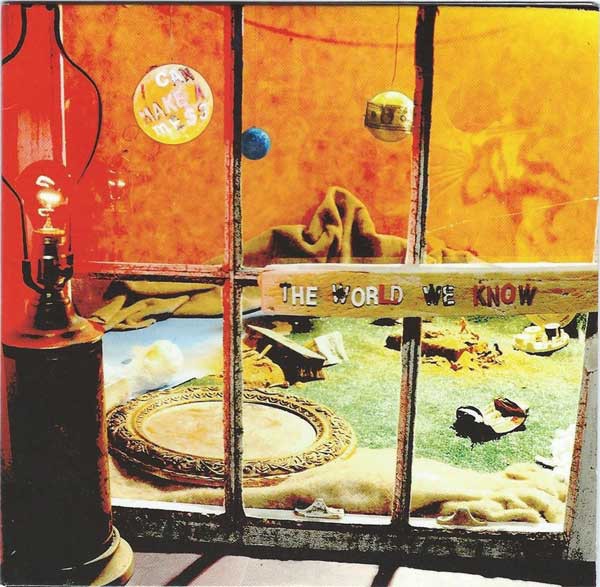
I wrote about I Can Make a Mess, The World We Know, and the things you can’t help but create over at The Alternative.
I wrote some words about Ratboy’s Printer’s Devil, check it out.
I haven’t been diligent about updating this blog, but I have been writing! I usually update Twitter if I’ve got something new, but here are a few things I’ve done in the past year that I wanna share:
Review: Great Grandpa — Four of Arrows
A Conversation With Ace Enders from The Early November
Review: Strange Ranger — Remembering the Rockets
Review: Pedro The Lion — Phoenix
Review: The Get Up Kids — Problems
And I also added to the massive amount of Copeland writing I’ve done over the years with some words about their latest album, Blushing.
More coming, thanks for sticking with me.
I spoke to Tigers Jaw about their new album spin. Check it out.

I feel like I can’t write about The Early November without writing about everything. It’s intimidating. It’s demanding. I have resolved to do it less often. Anyone who knows me even a little bit knows what my favorite band is, even if they don’t know why. It doesn’t take much for me to talk about their music. That’s normal stuff—they’re a band with a few albums and a bunch of songs; they play some of those songs in various locations; I go to them or I don’t; I listen to the music regardless. I can talk about the times I’ve seen the perform, about the songs I wish they’d play more and the ones they could maybe give a rest. I can quote lyrics at the drop of a hat. I can sing you whole songs, any of them, and I will without request.
I knew this day was coming. I knew I couldn’t let July 11, 2016 pass without writing something about The Mother, The Mechanic, and The Path. So, I’ve been thinking about what makes a favorite band a favorite band. The difference between a person with favorite bands and a person with a capitol F capitol B Favorite Band. One is not better than the other, but there is a difference. Some people have rotating favorites, a handful of artists that really do it for them. Some have new favorites and old favorites. Some people have a Favorite Band. I don’t know why it happens, but it does.
The Early November is my capitol F capitol B Favorite Band, and The Mother, The Mechanic, and The Path is my favorite record. It has been that way for ten years, ten years today. I don’t know if it was instant, but it was close enough. I vividly remember my sister opening that package, a CD digipack heavier than usual. It had the weight of a small book. A note apologizing for the lack of Tee shirt, apparently they had not been manufactured yet and they would be sent out at a later date (my sister never did receive that shirt, and oh does she remember it). I remember listening to certain songs in her red mustang on the way to the store or to swim practice. “Money in His Hand” and “Decoration” and “Hair.” I remember my sister asking what my favorite song was and thinking Danielle there are literally 46 fucking songs on this thing how in the world can I choose just one?
These are the facts and I’ve typed them out before. I know what happened in my life and I know how all the songs go. I know them a billion times over. But the connection from a) my life to b) these songs…I can’t articulate that. Over the past ten years, I have listened to The Mother, The Mechanic, and The Path from every position I can think of, like a sculpture you have to walk all the way around to get the full picture. I’ve listened to it at every point along my thread. Every time is new, different, vibrant, and brilliant. Not the same as it was in 2006. Not the same as it was when I was 12 years old. Different. It’s alive and changing. This is true because I am also alive and changing.
Okay so I feel like I’m some 500 words deep and I’ve been talking mostly about me and my life, which may be a no-no depending on who you are. While The Mother, The Mechanic, and The Path is a piece of art I hold very close to my heart, it is also a piece of art that I want everyone to experience and hopefully love. So, yes, let’s talk about the basics. The Mother, The Mechanic, and The Path is The Early November’s second full-length, the follow-up to their 2003 record The Room’s Too Cold. Given the choice between capitalizing on the momentum of The Room’s Too Cold with a streamlined rock record and creating something different and, well, crazy, the band obviously opted for the latter. The recording process, as documented in this video, was fraught with re-writes, label interjections, and in-fighting. Depending on who you talk to, it could be the reason for the band’s dissolution between 2007 and 2011.
But the record was eventually finished and released—three discs for the price of one, as the band insisted. The first disc,The Mechanic, is the band’s would-be traditional sophomore release, a taut and lean rock and roll record. The Mother focuses on some of the band’s lighter and pop-oriented tendencies. The Path insists on giving these two sides of the band a reason to co-exist on a single record, a narrative disc that explicitly reveals the story beneath the first 22 songs. The first two discs are easy enough to swallow, the third is where the band seems to lose people.
I’ve talked about it with anyone willing, and I’ve found that The Path is just something that either works for you or doesn’t. It’s a little musical without the visuals; it’s a small, isolated audio narrative that develops between a young man, Dean, and his therapist. Their conversations, or “Sessions,” are punctuated by songs that range from theatrical to simple, silly to heart-shattering. Abandoned by his parents, Dean is raised by his grandparents until his grandmother dies (in what is perhaps the pinnacle of Ace Enders’ repertoire of sadness, “Never Coming Back”) and he is reclaimed. Once Dean is grown up enough to do the abandoning, he runs from his parents and contemplates abandoning his own child. The album ends at this intersection, with the weird, grand finale of “A Bigger Meaning” and one little, maybe not too surprising, twist. It’s a story that, above all, insists on responsibility and self-awareness. It nurtures old wounds while demanding growth and fighting cycles of dangerous behavior.
I can trace so many things about myself down to The Mother, The Mechanic, and The Path. It’s the album that made music one of the most important things in my life, that showed me just how far songs and melodies and lyrics could go. It’s the thing that makes me want to write about art, that makes me want to create, that makes me want to build something that feels so far beyond my fingertips. I can reach my hand into the trove of memories I have attached to The Mother, The Mechanic, and The Path and pull up a version of myself from any point in my life—from my sister’s red mustang to my parents’ computer chair to my dorm room at 4 a.m. to right now. I can listen to this record and uncover all of the things I hope someday to be, the ways I hope to be better for everyone and for myself. I cannot accurately explain why it’s all there. I can’t tell you why the introductory bombast of “Money In His Hand” makes me sweat, why Ace’s first words (“I just can’t get this off my mind”) give me release. I can’t tell you why “The Rest of My Life” is my song of transition. I can’t tell you why I feel so connected to the world, so human when I sing “A Little More Time.” Why “The Truth Is…” and “Is It My Fault” and “My Lack of Skill” make me cry. Why “ A Bigger Meaning” makes me feel strange, awake, enlightened. I can go on and tell you every last thing this album does for me. But I can’t give you all these things. I don’t know where they come from.
But I bet you already have these things, locked away somewhere. Connected to one piece of art or maybe a few. Connected to a place, or a person, or a bunch of places or people. We are not self-contained spirits. We exist, at least partially, within the things we love. We exist in the understanding we feel, in the things that make us sweat or cry or laugh. If you know me, you at least know parts of the books I love, the people I keep close, the places in which I feel alive. We carry these things with us. We recognize each other and ourselves in these things. That’s why they’re important.
The Mother, The Mechanic, and The Path is important to me not just because it is one of those things, but also because it’s the thing that makes me grapple with all of that, that makes me dedicate a part of my life to understanding it. And I’m just glad this record exists, that it still makes me sweat and cry and laugh, even ten years later. That it has lived a million lives in me and in a bunch of other people.

Wrote a little thing about The Hotelier for Magnet, check it out!
Essential New Music – The Hotelier
My last few contributions to The Minaret:
REVIEWS:
OTHER STUFF:
“Watch and Listen: The Best Music Videos of 2016 So Far”
“Netflix and Fill (Your Stomach)”

Sound The Alarm is a dark and ugly album, the punk rock equivalent of aimless anxiety and vicious, guttural self-loathing. Within the course of the album’s 36 minutes, songwriter Chris Conley spills his guts in a hundred different ways, acting out an intense period of end-of-the-line internal aggression with an incredible fire. The 13 songs of Sound The Alarm see Saves The Day spitting out a personal doomsday onto record, with the burning, desperate feeling that this catharsis is saving a life. If not into these songs, where would all the fire go?
That haunting question is the very reason why Sound The Alarm, Saves The Day’s 2006 set, is still important 10 years later. These songs perform verbally and musically the darkest images of self-hatred, images that are often so potent that they’re best not removed from the context of their panicked pop-punk homes. But for all the paranoia, the violence, the depression, and the anxiety, Sound The Alarm is deeply and overtly anthemic. It survives in Saves The Day’s pristine and varied discography because it serves a particular purpose, more so than any other record the band has created in the two decades of its existence.
From the immediacy of the record’s opening line—delivered with the most venom of Conley’s career—that purpose is clear. Burning a door in the back of my mind. While it always seems like Sound The Alarm is such a necessary thing for the speaker’s (whether or not it be Conley) mental health, a catharsis for his deepest, most guarded personal hell, it works so well because the album returns the favor for the listener.
Of the hundreds, maybe thousands of albums I’ve listened to in my life, Sound The Alarm stands tall as the most personally cathartic of them all. When I sat down to write about the record, I looked back at the time I’ve spent with it and realized how much I needed, and still need, Sound The Alarm in my life. It’s an album for the worst days; it explodes with frustration aimed in every direction. And yet, it never forces these feelings upon the listener—these melodies crawl into my brain and out my own throat, releasing all the tension out into the open air. A musical exorcism, a step toward feeling better.
Sound The Alarm tells a lonely and desperate tale, but it’s most ubiquitous message is one of not being alone in this, of never being alone in this. That feeling of the walls closing in on you, of your own personal world in apocalypse, of your neurons firing at too-rapid pace…Sound The Alarm encapsulates those feelings with razor-sharp riffs and breakneck tempos. One second, it rejects friendship for paranoia (“Bones,” “Delusional”), the next, it laments isolation and lack of understanding (“Sound The Alarm”). It documents all the nuances of personal crisis: from the deep, self-loathing come down (“Don’t Know Why”) to the unabashed hatred at the world for doing this to you (“The End”). Sound The Alarm is an album for the times when you just can’t stand to be around people but you need something to understand the difficulty and unknowability of the ugliness you’re dealing with.
Sound The Alarm isn’t the end of a road, though. It’s a single step away from the world, never far enough away that you can’t go back. It’s a beginning, a burst of blistering aggression that can and will be resolved. 2007’s Under The Boards and 2011’s Daybreak tell the story of resolution. Sound The Alarm serves as a reminder that the utter inability to handle the world is momentary. The feelings will pass, will eventually turn into enlightenment and life will go on. There is a way out.
 Jordan Walsh