
I’ve written two reviews over the past few weeks for The Minaret, check them out:
The 1975 – I like it when you sleep, for you are so beautiful yet so unaware of it
I’ve written two reviews over the past few weeks for The Minaret, check them out:
The 1975 – I like it when you sleep, for you are so beautiful yet so unaware of it
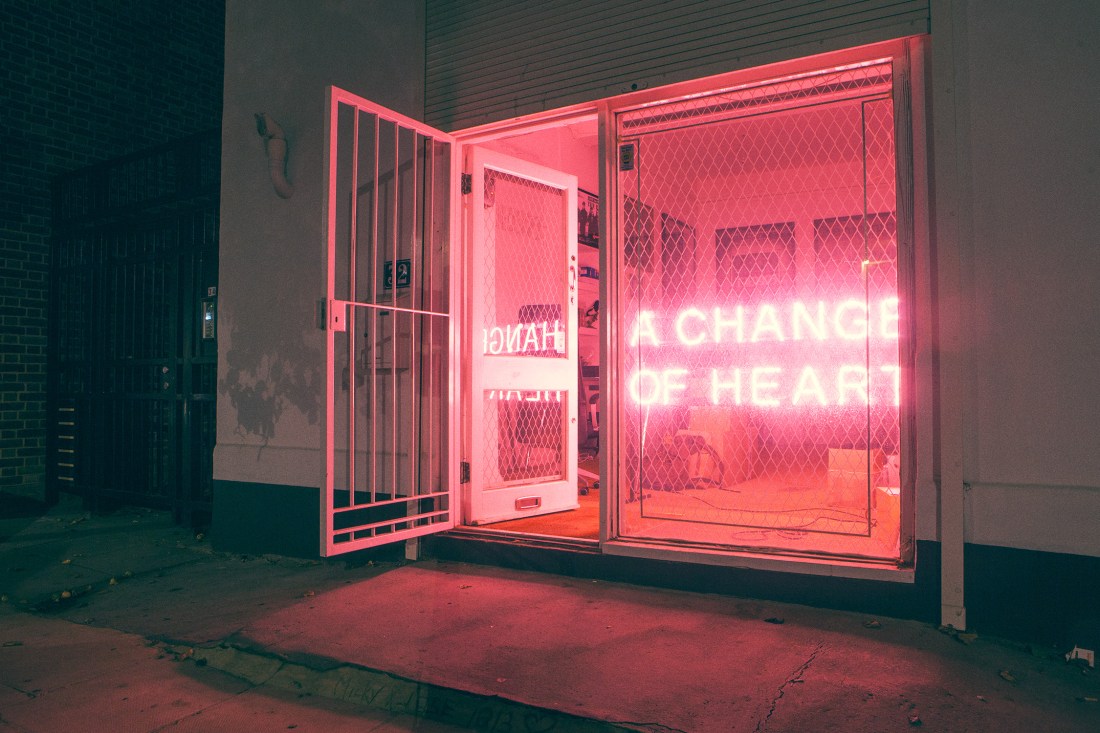
Taking a break from writing my 1975 review to work out a few things on paper. It’s been a tough month. I’ve been rejected from 7 out of the 8 grad schools I applied to over the last four weeks. Each one has been a hit, knocked me out for anywhere from an hour to a few days to a week. I’ve handled it and I’m moving past it; I’ve been working on not internalizing all of this too much because I know it’s kind of a crapshoot no matter what I do in these situations. Still, it’s not fun to get these emails and letters one-by-one-by-one and on and on. No matter how much I tell myself how fine I’ll be if I don’t get in (which I will be, really), rejection can’t not take a toll on me. So I’ve given myself some leeway, which I don’t normally do. I supplant the compulsion to feel guilty about moping with some time to just let myself be sad because I am sad.
As I wait to hear back from the last school, I look back at the past month of rejections, and the sadness and self-reflection they induced in me. The former is boring and not all that important; the latter is. And as I sit here in Plant Hall on a Sunday, putting off all of the stuff I need to do (again), I think about the second wind I got earlier in the week, and take solace in the good things I have in my little bubble which spurned that second wind on, without me really understanding why.
I think I grasp it a little more now, in my caffeine haze. I understand why earlier this week I got out of bed before 11 a.m. for the first time this month. The new 1975 record was waiting for me that morning, and that first listen invaded and reconfigured my headspace, but it wasn’t the record itself that turned things around for me that morning (as incredible as it is, album of the life incoming).
What turned me around, what truly energized me for the first time in I don’t know how long, were all the things I had to say about that record, planted in my brain to be harvested over the next few days and weeks. Now, I blamed the record at this point, but as I sat down to write my review and struggled to get everything on paper in a space compact enough where one or two people would read it, I realized that I was pulled out of my haze of momentary failures by the thing I was meant to do with my life. It hit me at around 500 words (wherein I hadn’t even exhausted all I had to say about “Love Me,” and had forced myself to move on), when I stopped and took a walk around the building through which I’d come and gone countless times over the last four years.
I was meant to write about music. I don’t mean that divinely or self-indulgently (although I like it when you sleep… sure does inspire that kind of rhetoric), I mean that in the most intimate and personal way. It doesn’t mean that I think I’m all that good at it or that I’m unique in any way, or that I don’t grapple with the difficulty of constructing my chosen art form completely on the basis of another art form. But it does reduce those worries in my mind to something more manageable.
The proposal I sent to my graduate schools was to be a kind of cultural studies project on the punk subculture, analyzed through a theoretical lens. That’s simplifying it a lot, but that’s basically what it was. Although I was excited about the prospect of tackling this project, I found that I was shy about telling more than a few people out of some kind of fear of being judged…I can’t even put my finger on exactly why. I know now that this was a stupid attitude. I walked to my advisor’s office to talk it out, but he wasn’t there (which is kind of shocking actually, even though it’s Sunday). But I think I’ve parsed it out on my own. That attitude is stupid because I’m god damn lucky.
I’m lucky to know what makes me happy; what makes me feel worthwhile; what makes me feel like I have something, anything to say. And I’m going to follow that feeling for as long as it still exists in me. Whether it’s in grad school (by the way, I love you [graduate school redacted] admissions person), or through a publication, or all by myself in a million unread word documents while I work some crappy (or maybe even good!) unrelated job. And as I prepare to leave this school, having no clue where I’m going or what I’m doing, I realize that every little thing I’ve done here has led me to this realization—this thing I came into this place knowing, on some level—that I wanted to write about music. If I’m leaving college sure of anything, this is it.
And that’s something to feel good about….I feel good about it. I can’t promise that I always will, but right this moment, I’m happy to have something that gets me out of bed.
Okay, that’s it. Back to the sound and the words that come with it.
Today The 1975 officially released their incredible sophomore album I like it when you sleep, for you are so beautiful yet so unaware of it. I’m working on a review of that record now, and for nostalgia’s sake I sought out the review I wrote for their debut in 2013. My love for this record has only expanded in the past three years (I even like the spelling in “MONEY” now!), and it’s interesting to compare the way I felt about The 1975 in those early days of release with the dawning of a brand new record. The feelings are similarly magical and inspiring. I’ll spill a lot of words about this band in the coming days, but for now I thought it would be fun to put this review back on the web for nostalgia’s sake.
The following review was written in 2013 for The Minaret, during my first year as arts editor.
Some music has a way of completely surrounding a listener. Headphones on, lights out, eyes closed, volume up. Somehow, the music provides all of the color in the world. It may sound romanticized, but the most important music is not the most technically advanced or lyrically clever—it’s the music that defines a point in time in a listener’s life. I can hear a song I loved six years ago and remember how I felt the first time I heard it. This is what makes music more than just sound released from a speaker—it’s an experience all in itself. Sometimes, it’s expected— if an artist I’ve loved for years releases an album, I will obviously expect to love said album. Other times, it comes without warning and knocks me off my feet.
Enter Manchester, UK’s The 1975, with a self-titled debut album. After 10 years, five band names, hundreds of shows and a few awesome EPs, it seems silly how little I knew about them before this past month. However, my ignorance has made the impact of The 1975 all the more powerful.
Headphones on, lights out, eyes closed, volume up.
The record opens with the aptly titled “The 1975,” a slow-burn intro track that displays The 1975’s remarkable attention to detail and atmosphere when creating music. The song invokes images of dark highways, with city skylines growing brighter and brighter the closer they get. “Go down/Soft sound/Midnight/Car lights,” mumbles Matt Healy melodically. The song builds and builds until the highway ends and “The 1975” collides with “The City,” a steady, driving track which shows the band’s ability to write an incredible but simple hook (“you want to find love, you know where the city is”).
This ability is essential here, as The 1975 is undoubtedly a pop album, one that justifiably thrives on the strength of its hooks. However, The 1975 shows that it has the upper hand over other pop acts by putting just as much weight on groove and overall sound as it does on catchiness. Take for example “M.O.N.E.Y.,” a sporadic track with a more understated hook (“has he got enough money to spend?”) that blends in with the verses. “M.O.N.E.Y.” focuses more on making the listener move with its myriad of sounds than it does on making them remember the chorus. This is not to say that The 1975 is devoid of radio hits, as “Sex” is a soaring, all-out, pop-rock track, so rich in youth and impulse that it’s sure to be a fan favorite for the entirety of The 1975’s career.
As difficult as this is over a 16-track run time, The 1975 never falters from its impeccable flow. The interludes help out, reminding the listener that this is indeed a complete album and not just a collection of songs. Lyrically, the record focuses on the recklessness and insecurity that comes with early adulthood—dealing with infidelity and lust (“there’s only minutes before I drop you off/ all we seem to do is talk about sex/ she’s got a boyfriend anyway”), as well as feelings of responsibility and regret (“When I’m home you know I’ve got you/Is there somebody who can watch you?”).
The 1975 reaches a climax of sorts with “Robbers,” an impeccable love song that puts emotion at the forefront as it builds into an imaginative vignette of fragile young love (“Well now that you’ve got your gun/It’s much harder now the police have come/And I’ll shoot him if it’s what you ask/But if you just take off your mask/You’d find out that everything’s gone wrong”), making for one of the best songs of the year.
As new and exciting as The 1975 feels, it is the influence it takes from the past that really takes the album over the edge. “Girls” and “Heart Out” could have been ripped from an ‘80s John Hughes film, while the former and “Pressure” are bleeding with sounds of Michael Jackson worship.
Perhaps the most impressive aspect of this album is how singular everything feels. Nearly every sound produced, every lyric and every track-to-track transition feels natural. No one element takes precedent—The 1975 itself is the star of this album. Not every decision lands perfectly (the spelling part in “M.O.N.E.Y.” is grating, and the back half of the album is much stronger), but over 16 tracks, there are an amazingly few number of missteps.
With their debut album, The 1975 have crafted something memorable and important. It is as futuristic as it is nostalgic and as pondering as it is upbeat. While The 1975 are sure to make a huge cultural impact in the next few years or even months, the band has already proven their venture to be successful. They have created an album that will resonate with their fans and define a point in time in their lives. Because of this, The 1975 has already hit it big—anything more is just well deserved money in the bank.
Mineral Girls – Cozy Body
Tame Impala – Currents
The Front Bottoms – Back On Top
mewithoutYou – Pale Horses
Laura Stevenson – Cocksure
Vince Staples – Summertime ’06
Carly Rae Jepsen – Emotion
The Money Pit – The Money Pit
Foxing – Dealer
Ace Enders – Hiraeth
Young Jesus – Grow/Decompose
Prawn and Moving Mountains – Split
Chvrches – Every Open Eye
Better Off – Milk
All Get Out – Movement
Beach House – Depression Cherry
Drake – If You’re Reading This It’s Too Late
Alabama Shakes – Sound and Color
Adult Mom – Momentary Lapse of Happily
Built To Spill – Untethered Moon
Donnie Trumpet and the Social Experiment – Surf
Butch Walker – Afraid of Ghosts
Titus Andronicus – The Most Lamentable Tragedy
Noah Gundersen – Carry The Ghost
Fall Out Boy – American Beauty/American Psycho
Sufjan Stevens – Carrie and Lowell
War On Women – War On Women
Punchline – Thrilled
Grimes – Art Angels
The Mountain Goats – Beat The Champ
GLOSS – Demo
Eskimeaux – O.K.
Baroness – Purple
Oso Oso – Real Stories of True People…
Good Old War – Broken Into Better Shape
Death Cab For Cutie – Kintsugi
Emancipatior – Seven Seas
Petal – Shame
Waxahatchee – Ivy Tripp
Modest Mouse – Strangers To Ourselves
Kendrick Lamar – To Pimp a Butterfly
The World Is A Beautiful Place… – Harmlessness
Allison Weiss – New Love
Chayce Halley – Bloom House
MuteMath – Vitals
The Sidekicks – Runners In The Nerved World
Desaparecidos – Payola

I wrote an article for a new organization called Safer Scene–which strives to make the punk/alternative/emo scene a more open and safe place for everyone. They’re going to do some really great and incredible stuff for our community and I was honored to help. Make sure you keep up with them on Facebook, Twitter, and Tumblr!
 I’m the queen of rock and roll.
This line, from Sleater-Kinney’s 1996 sophomore outing Call The Doctor, was delivered more tauntingly and angrily than triumphantly. It wasn’t yet a declaration, with the band still in its youngest era and lacking a stable drummer. It was more of a mission statement—less about filling a role of the male rock superstar as it is displayed (mockingly) in “I Wanna Be Your Joey Ramone,” and more about stretching the boundaries about what it means to be a “rock star” in modern America.
Sarcastic intentions or not, by the time Sleater-Kinney’s initial run fizzled out in 2006, Janet Weiss, Corin Tucker and Carrie Brownstein (best known in recent years from her work in the IFC comedy series Portlandia) were the queens of rock and roll. From 1995’s sonic eruption of Sleater-Kinney to 2005’s equally loud but significantly grander The Woods, the members of Sleater-Kinney declared themselves as one of rock ‘n’ roll’s all-time finest and let out a fierce, guttural scream at the constructed and accepted norms of our society.
The band’s first full-length in ten years is not merely an echo of that scream muted by time, new projects, or maturation. Instead, No Cities To Love is just as loud and clear, just as pissed-off and affective as ever. Flaunting all of the aggression of 1996’s Call the Doctor with the top-notch songwriting and confidence of The Woods, No Cities To Love sees Sleater-Kinney returning at full force.
And they hit the ground running. Opener “Price Tag” wastes no time lingering on the fact that this is the band’s first album in ten years, there’s no huge build-up to what surely is a pressurized can of expectations pent up over a decade of silence. No, Weiss, Tucker and Brownstein just launch right in to a blazing release of frustration at the monotony of routine life and the modern fixation on money. Brownstein’s opening riff is bouncy and sinister and immediately draws listeners back in to the distinct but ever-evolving sound of Sleater-Kinney’s tight, hooky but incredibly complex brand of punk rock. Brownstein’s and Tucker’s guitar lines bare their fangs at each other in somehow beautiful and rousing harmony, as Tucker’s assertive, intense vocals seem once again to lead an army of today’s discontents into a sort of moral, spiritual and societal war.
Each of No Cities To Love’s ten tracks delivers an attack on the powerful and corrupt, and strives to unify the outcasts, the underrepresented and the wrongfully suppressed. “Surface Envy” has all of the gusto and spirit of a classic punk rock song, a vocal back-and-forth with Brownstein and Tucker culminating in a chanting, anthemic chorus of, “Only together do we break the rules.” “Bury Our Friends” carries on in a similar fashion as a proclamation of self-awareness and self-empowerment—“Only I get to be sickened by me…we’re wild and weary, but we won’t give in.”
And this is the essence of the album as a whole, and indeed much of Sleater-Kinney’s back catalog—not letting the perceived notions of what a person should be stop them from being everything they can be. The band proves this point better than they ever have before simply by releasing an album this fantastic ten years removed from their last. That magic is supposed to be gone by now, isn’t it? No Cities To Love is a swift “to hell with that notion” jammed into 33 minutes of intense, passionate and damn good rock and roll music.
No Cities To Love is capped off by the doomsday march of “Fade,” a siren-sounding lead riff leading the listener to emergency, a signifier of time running out more quickly than we imagined. Weiss’s drum lines build steadily to an apex and then die off into cautioned cymbal ticks as Tucker warns, “If there’s no tomorrow, you better live.” “Fade” begs us to make the most of our time as Tucker’s razor-sharp croon nearly seems to be coming from another world—“if we are truly dancing our swansong, darling/shake it like never before.”
Sleater-Kinney’s eighth record embodies this idea, with every minute exuding this tension of having so much to say and do but so little time and space to do it. As a result, No Cities To Love is a blast of colorful, liberating, fist-in-the-air sing-along rock music that is so dense and satisfying that it’s good enough to hold us off for another ten years– but let’s hope we don’t have to wait so long. We need the queens of rock and roll now more than ever.
NOTE: This article was originally published in The Minaret.

Death Cab For Cutie is quickly approaching the two-decade milestone, and with that comes the weight of legacy. The act has served as a major representative of millennial indie rock, with two or three seminal records well over a decade old and one on the brink (2005’s major label Plans). For years now, Death Cab has set the bar for a very distinct brand of professional and confessional indie music. From haunting and minimalist echoes of youth (2000’s We Have The Facts And We’re Voting Yes) to cathartic, arena-worthy emo rock (2003’s classic Transatlanticism), to glossy, macabre and mature balladry (Plans), Death Cab has compiled a bildungsroman of sensitivity and surprising grace while maintaining one of the most consistently great discographies in indie rock.
So how does one bring a new record into the conversation with all-time favorites? How can I talk about Kintsugi, the band’s eighth studio album, in the same breath as Transatlanticism, a record with over 12 years of personal and musical history behind it? The easy answer is that I can’t. I can’t hold Kintsugi opener “No Room In Frame” up to Transatlanticism opener “The New Year” with a straight face, with any real insight to be had. I can’t seriously attempt to compare one of the best album climaxes I’ve ever heard (the one-two-three punch of “Tiny Vessels,” “Transatlanticism,” and “Passenger Seat”) to any selection of this new record. There’s no contest, and at this point there honestly never could be. The only question I can answer, in the immediate wake of release, is whether or not Kintsugi is a good record. Not ignoring the legacy of a great band, but acknowledging the impossibility of the task of one-on-one comparison.
With all of this in mind, I can now confidently say this: Kintsugi, is a great record. Kintsugi simultaneously balances all of the most admired aspects of the band’s discography while teetering on the edge of new territory. The band’s last record with long time member Chris Walla and the first without Walla as producer, Kintsugi is a record of transition, both in content and execution.
After the nervous bliss of 2011’s mildly received Codes and Keys, Kintsugi feels like a return to more depressing subject matter. Throughout the record, relationships crumble and fade away, homes are abandoned and reestablished, grey hairs appear and fall out. The aged character of this record suits the band nicely—indeed, Death Cab has always seemed to have an old soul, level-headed but constantly aching.
Kintsugi is an art form that reconstructs broken artifacts, lining the cracks with gold. This idea pervades the record, a constant sense that things have fallen apart for the good of better reassembly. This is a record that does not dwell, but tries to move on. Opener “No Room In Frame,” in keeping with this theme, is a driving song, maintaining songwriter Ben Gibbard’s affinity for Kerouac-like tales of fleeing. “I disappear like a trend/in the hum of the five in the early morning,” he delivers bouncily over meandering electronics and deliberate guitar plucks. This stellar reintroduction is an affirmation of the relevance of self-discovery well into adulthood, a reminder to recognize one’s self and act in accordance (“how can I stay in the sun when the rain flows all through my veins/it’s true”).
While Walla’s production work has pushed this band to its greatest heights over the past twenty years, the introduction of new producer Rich Costey into the mix really helped shake off any sense of staleness. This is especially evident on dancy standout “Good Help (Is So Hard To Find),” which sports a kind of bouncy indie pop reminiscent of The 1975. Meanwhile, “Little Wanderer” is light and breezy while “Hold No Guns” is intimate and isolated. The range of texture on Kintsugi is impressive, the record still maintaining a solid sense of flow (despite a little clunkiness toward the middle—the transition from “Hold No Guns” to the harsh ‘80s synth of “Everything’s A Ceiling” is rather abrupt).
The movement-inducing style of “Good Help” and “Everything’s A Ceiling” marks new territory for the band, but much of this record is a comforting point of balance struck between Death Cab’s past stylistic ventures. Lead single “Black Sun” recalls “Narrow Stairs” in its biting guitar solo and lyrical darkness, but incorporates Codes and Keys‘s carefully articulated use of electronics and tidy production. “You’ve Haunted Me All My Life” sounds like an extension of some of Plans mid-album cuts, while closer “Binary Sea” plays as a less reactive version of Transatlanticism’s more majestic piano-led numbers. This fine-tuning never feels like a cheap retread, however. Instead, it comes off as reflective of a journey so far, a conscious admission of a checkpoint reached. With a core member leaving for good, it feels like an important and well-deserved wrapping-up of an era.
However, this is a wrapping-up in full awareness of another act to follow. The final lines of the record reflect this awareness of legacy and hopefulness for great music to come: “lean in close, and lend an ear/there’s something brilliant bound to happen here.” After years of creating great music, Death Cab has secured its position as a solid, trusted institution of indie rock. Kintsugi, as a record of transition, admits this and promises to follow through in the future. In the meantime, it’s just another great entry into a wonderful body of work. Who knows, maybe history will treat it as kindly as its most revered predecessors.
NOTE: This article was originally published in The Minaret.

If only existential crises were as fun as Courtney Barnett makes them seem. On her debut full length record, Sometimes I Sit and Think, and Sometimes I Just Sit, Barnett delivers a snapshot of the life of a twenty-something: an aimless confusing existence composed of equal parts punk, rock and roll, and ‘80s shambling indie pop. The result is hauntingly accurate and strangely anthemic for those living in a transitional liminal space— troubled enough to get sad to, upbeat enough to yell along to. An excellent combination.
No song nails this combination like opener “Elevator Operator,” a loosely rocked-out number about a depressed office worker. The lyrics to this song, as with the rest of the record, are utterly dense—an unfiltered ramble streaming among brightly strummed electric guitars. Barnett’s voice is slightly bored as she recounts this strange dual crisis: “Don’t jump little boy, don’t jump off that bridge….he said ‘I think you’re projecting the way that you’re feeling.”
“Pedestrian At Best” is a little bit harder; a more pronounced punk or grunge edge pervades this anthem of false perception. Here, Barnett lets some grit into her voice to overpower the wall of sound behind her: “Put me on a pedestal and I’ll only disappoint you/tell me I’m exceptional and I promise to exploit you.” As close to catharsis as Sometimes I Sit and Think, and Sometimes I Just Sit will get, “Pedestrian At Best” is somehow an empowering way of saying “I’m really not that great.”
The K Records influence pervades a good portion of the record, taking its best form with “Nobody Really Cares If You Don’t Go To The Party,” a perfect sonic representation of the introvert’s desire for social interaction, but without having to get out of bed. “I wanna go out but I wanna stay home,” Barnett flatly delivers over a beachy melody.
Some of the record’s best moments aren’t well-suited for a sunny drive, however. “Small Poppies” is a long, bluesy cut that comes across like a daytime fever dream: “I dreamed I stabbed you with a coat hanger wire.” “Depreston” broods over the story of a couple buying their first home together, building up to a delicate delivery of the record’s most heartbreaking lines: “If you’ve got a spare half a million/ you could knock it down and start rebuilding.” This may seem mundane, but in reality it’s a prescient reminder that it’s okay to start over if the resources are available— but that means giving up on what’s been built so far. This is the crux of what makes Sometimes I Sit and Think, and Sometimes I Just Sit such a good record. The pervading feeling of steam being lost in an effort to make more of one’s life, but a willingness to go on trying anyway. More than anything, “Sometimes” is about control over identity, self and destiny. Courtney Barnett is startlingly wise in this department, and this debut record is essential listening because of it.
NOTE: This article was originally published in The Minaret
One of the most common responses I’ve seen in my six or seven years of consistently reading music writing is the legendary, emphatic you’re so biased.
It’s also a pillar of one of the most confounding ideologies I’ve ever encountered when it comes to discussions in musical communities. What does it mean to be “biased” when reviewing an album? When talking about music? Why on earth should a writer deny in their writing the very attributes of the music that drew them to the art in the first place? Is a music writer forever doomed to be dishonest in the endless pursuit to be, ugh, objective in music reviewing and writing?
This last week, I’ve been looking a lot at the differences between the indie music created in the 1980s and the music created now. A lot of the indie music in the 80s had a way of being loosely performed—that is, the skill of the musician was not as important as the projection of authenticity. Take, for example, Beat Happening’s 1986 self-titled debut. In an objective light, the album simply shows that the members of Beat Happening had a lot of growing to do…the lyrics were simple, the vocals were flat, and the album itself sounds like it was recorded in a small cave with a hand-held tape recorder. All of this is true—but objectivity doesn’t explain why Beat Happening is a damn enjoyable record. That is explained by something more than the “art itself,” inspected in a vacuum, can ever reflect. Beat Happening is enjoyable and wonderful because it’s damn honest. A messy, poorly recorded piece of work like Beat Happening is authentic because it makes clear all that the band cared about while creating it was their commitment to the craft. Their limited funds and resources were drained in the effort to make the album, and for that reason the authenticity of the piece is clear when listening to the album. It’s fun, simple, and honest—and it became important to people because of all this. It became important because people cared about it, and because of all the changing, the growing up, the heartbreak, and the happiness that would eventually be attached to it—attributes that make it more important than any objective lens could ever reveal.
This is want I want to see when I read a piece about music. I find that, as I’ve grown older, I don’t so much like the album reviews and music pieces that aim to be “even handed” or “subjective” as much as I like the ones that openly and unabashedly display the effects that the music had on them on a personal level. That’s the most exciting thing. Did this beautifully produced, tightly performed, technically amazing record fly right by you? Or did Beat Happening change your life?
To hell with “objectivity,” I want honesty.
Here’s the honest to god truth about Jimmy Eat World’s 2004 album Futures: it changed my life. It continues to change my life every single time I turn it on. That’s what matters, that’s why music matters—because, truthfully, every album has something to make it appealing to someone. A hook, an obscurity, a little something that says buy me—no matter what genre or label or lack thereof. But, not every album has what Futures has. Every album has a reason for it to sell 500,000 copies, but very few a have the ability to become such an important part of somebody’s life. Perhaps it’s ineffable, but Futures is an album that means everything to so many people, even ten years after it first hit their ears.
Or six years, as it has now been for me. But that’s been more than long enough for me to understand that this is music that will always have a place in my life. The songs may change in meaning as I grow older, as they have since 2008, but they’ll always have that core…something to them that I’ll always cling to.
And the meanings and the memories I’ve attached to these 11 songs have changed plenty over the last six years. ‘The World You Love,” for me, embodies an experience from only eight months ago—the night I put my intoxicated friends to bed, sprawled across my living room floor in the very first hours of 2014, the first time we’d all been together in eighteen months (I fell asleep with my friends around me/only place I know I feel safe). Just days ago, while listening to “Work” as I walked through Oxford (I’m now three weeks into the term I’m spending here), I thought of the independence and the chance to create my own life that I had wanted for so long to the tune of this song. And I realized that the experience I’m having here now is the beginning of all that for me. I’ve never smiled so wide in my life.
Then again, maybe the songs don’t change as much as I think they do. “Futures” has always been that sonic step forward, that accompaniment to the very same motivation that has allowed me to take some sort of control of my life. “Polaris” has always been the midnight drive song, the recording I’ve blown my voice out to more than any other—this cathartic moment shattering the emotional glass ceiling every last time:
I’m done, there’s nothing left to show,
Try but can’t let go.
Are you happy where you’re standing still?
Do you really want the sugar pill?
I’ll wake up tomorrow and I’ll start,
Tonight it feels so hard.
As the train approaches Gare du Nord,
As I’m sure your kiss remains employed,
Am I only dreaming?
More than all of this though, I’m actually planning a future with these songs. I’ll play “23” in the hour I actually turn 23. I’ll spin my new vinyl copy of the album (by this time, wearied and scratched from consistent use) for my kids someday.
And doesn’t that mean something in itself? Putting aside the fact that Futures is an expertly produced album; that Jim Adkins’ vocal performance is one of the most emotionally charged I’ve ever heard; that these layered, intricate songs are executed with remarkable ease and proficiency—isn’t it a testament to the greatness of Futures that these songs are just so deeply ingrained into my life—into so many peoples’ lives—past, present, and future?
What’s the point of me waxing poetic about Futures over a thousand words? What’s the point of talking about me just as much as I’m talking about the album? The point is this: I can’t honestly talk about Futures without talking about myself. That’s how important it is. It’d be the same thing if I were talking about The Mother, The Mechanic, and The Path or Invented (yes, Invented) or Stay What You Are or Transatlanticism. The music is part of my life. That is the honest truth about these records, and I can’t talk about why I like them without stressing that fact. The best music is that which means something to you, and we talk about it so vehemently because, well, if it has the ability to mean something in my life, who is to say that it couldn’t mean something in yours? One of the reasons we (or, at least I) listen to new music incessantly is because of the possibility that this new album could be our next Futures or Trouble Will Find Me or The Queen Is Dead. Because it could be the next thing that changes our lives.
But more than that, even if you hate Futures or just think it’s okay and are reading this anyway, aren’t you thinking about a different record? Aren’t you thinking about that album you grew up with and will continue to grow up with? About a piece of art that had a hand in making you who you are now? About your Futures?
Aren’t you thinking of why it means anything at all to you?
Good.
Don’t it feel like sunshine after all?
Hey, it’s been a while. I’m busy preparing and slowly getting myself motivated for my trip to England (only 10 days to go). Since today is the first day in what seems like a hundred years that the temperature is under 80 degrees (that’s remarkable in Florida), I got to thinking about my favorite Fall records. Fall is traditionally a time of epiphany and growth for me, and part of this is facilitated by the music I discover and grow to love as the air outside transitions from “hot as balls” to “okay this isn’t terrible.” Here’s a list of my favorite Fall records:
Jimmy Eat World- Invented
Death Cab For Cutie- The Photo Album, Transatlanticism, Plans
Copeland- Beneath Medicine Tree
Basement- colourmeinkindness
The Graduate- Only Every Time
Into It. Over It.- Intersections
Jeff Buckley- Grace
Brand New- Daisy, Deja Entendu
Kevin Devine- Brother’s Blood
Lydia- Paint It Golden
Mansions- Dig Up The Dead
The Smiths- The Queen Is Dead, Louder Than Bombs
The National- Trouble Will Find Me, High Violet
Northstar- Pollyanna
Punchline- Just Say Yes
Saves The Day- In Reverie, Through Being Cool, Daybreak
The Shins- Wincing The Night Away
The 1975- The 1975
Dashboard Confessional- The Swiss Army Romance, Alter The Ending
Sunny Day Real Estate- Diary, How It Feels To Be Something On
The Appleseed Cast- Low Level Owl, Illumination Ritual, Two Conversations
Matt Pond PA- Emblems
Bon Iver- For Emma, Forever Ago
fun.- Aim and Ignite
Hopefully this blog will be busier over the next few months while I study abroad at Oxford. I’m thinking I’ll have a lot to say about my experiences, and a lot of music-related write-ups pertaining to the projects I’ll be working on.
 Jordan Walsh