
Sorority Noise – You’re Not as ___ as You Think
Infinity Crush – Warmth Equation

I feel like I can’t write about The Early November without writing about everything. It’s intimidating. It’s demanding. I have resolved to do it less often. Anyone who knows me even a little bit knows what my favorite band is, even if they don’t know why. It doesn’t take much for me to talk about their music. That’s normal stuff—they’re a band with a few albums and a bunch of songs; they play some of those songs in various locations; I go to them or I don’t; I listen to the music regardless. I can talk about the times I’ve seen the perform, about the songs I wish they’d play more and the ones they could maybe give a rest. I can quote lyrics at the drop of a hat. I can sing you whole songs, any of them, and I will without request.
I knew this day was coming. I knew I couldn’t let July 11, 2016 pass without writing something about The Mother, The Mechanic, and The Path. So, I’ve been thinking about what makes a favorite band a favorite band. The difference between a person with favorite bands and a person with a capitol F capitol B Favorite Band. One is not better than the other, but there is a difference. Some people have rotating favorites, a handful of artists that really do it for them. Some have new favorites and old favorites. Some people have a Favorite Band. I don’t know why it happens, but it does.
The Early November is my capitol F capitol B Favorite Band, and The Mother, The Mechanic, and The Path is my favorite record. It has been that way for ten years, ten years today. I don’t know if it was instant, but it was close enough. I vividly remember my sister opening that package, a CD digipack heavier than usual. It had the weight of a small book. A note apologizing for the lack of Tee shirt, apparently they had not been manufactured yet and they would be sent out at a later date (my sister never did receive that shirt, and oh does she remember it). I remember listening to certain songs in her red mustang on the way to the store or to swim practice. “Money in His Hand” and “Decoration” and “Hair.” I remember my sister asking what my favorite song was and thinking Danielle there are literally 46 fucking songs on this thing how in the world can I choose just one?
These are the facts and I’ve typed them out before. I know what happened in my life and I know how all the songs go. I know them a billion times over. But the connection from a) my life to b) these songs…I can’t articulate that. Over the past ten years, I have listened to The Mother, The Mechanic, and The Path from every position I can think of, like a sculpture you have to walk all the way around to get the full picture. I’ve listened to it at every point along my thread. Every time is new, different, vibrant, and brilliant. Not the same as it was in 2006. Not the same as it was when I was 12 years old. Different. It’s alive and changing. This is true because I am also alive and changing.
Okay so I feel like I’m some 500 words deep and I’ve been talking mostly about me and my life, which may be a no-no depending on who you are. While The Mother, The Mechanic, and The Path is a piece of art I hold very close to my heart, it is also a piece of art that I want everyone to experience and hopefully love. So, yes, let’s talk about the basics. The Mother, The Mechanic, and The Path is The Early November’s second full-length, the follow-up to their 2003 record The Room’s Too Cold. Given the choice between capitalizing on the momentum of The Room’s Too Cold with a streamlined rock record and creating something different and, well, crazy, the band obviously opted for the latter. The recording process, as documented in this video, was fraught with re-writes, label interjections, and in-fighting. Depending on who you talk to, it could be the reason for the band’s dissolution between 2007 and 2011.
But the record was eventually finished and released—three discs for the price of one, as the band insisted. The first disc,The Mechanic, is the band’s would-be traditional sophomore release, a taut and lean rock and roll record. The Mother focuses on some of the band’s lighter and pop-oriented tendencies. The Path insists on giving these two sides of the band a reason to co-exist on a single record, a narrative disc that explicitly reveals the story beneath the first 22 songs. The first two discs are easy enough to swallow, the third is where the band seems to lose people.
I’ve talked about it with anyone willing, and I’ve found that The Path is just something that either works for you or doesn’t. It’s a little musical without the visuals; it’s a small, isolated audio narrative that develops between a young man, Dean, and his therapist. Their conversations, or “Sessions,” are punctuated by songs that range from theatrical to simple, silly to heart-shattering. Abandoned by his parents, Dean is raised by his grandparents until his grandmother dies (in what is perhaps the pinnacle of Ace Enders’ repertoire of sadness, “Never Coming Back”) and he is reclaimed. Once Dean is grown up enough to do the abandoning, he runs from his parents and contemplates abandoning his own child. The album ends at this intersection, with the weird, grand finale of “A Bigger Meaning” and one little, maybe not too surprising, twist. It’s a story that, above all, insists on responsibility and self-awareness. It nurtures old wounds while demanding growth and fighting cycles of dangerous behavior.
I can trace so many things about myself down to The Mother, The Mechanic, and The Path. It’s the album that made music one of the most important things in my life, that showed me just how far songs and melodies and lyrics could go. It’s the thing that makes me want to write about art, that makes me want to create, that makes me want to build something that feels so far beyond my fingertips. I can reach my hand into the trove of memories I have attached to The Mother, The Mechanic, and The Path and pull up a version of myself from any point in my life—from my sister’s red mustang to my parents’ computer chair to my dorm room at 4 a.m. to right now. I can listen to this record and uncover all of the things I hope someday to be, the ways I hope to be better for everyone and for myself. I cannot accurately explain why it’s all there. I can’t tell you why the introductory bombast of “Money In His Hand” makes me sweat, why Ace’s first words (“I just can’t get this off my mind”) give me release. I can’t tell you why “The Rest of My Life” is my song of transition. I can’t tell you why I feel so connected to the world, so human when I sing “A Little More Time.” Why “The Truth Is…” and “Is It My Fault” and “My Lack of Skill” make me cry. Why “ A Bigger Meaning” makes me feel strange, awake, enlightened. I can go on and tell you every last thing this album does for me. But I can’t give you all these things. I don’t know where they come from.
But I bet you already have these things, locked away somewhere. Connected to one piece of art or maybe a few. Connected to a place, or a person, or a bunch of places or people. We are not self-contained spirits. We exist, at least partially, within the things we love. We exist in the understanding we feel, in the things that make us sweat or cry or laugh. If you know me, you at least know parts of the books I love, the people I keep close, the places in which I feel alive. We carry these things with us. We recognize each other and ourselves in these things. That’s why they’re important.
The Mother, The Mechanic, and The Path is important to me not just because it is one of those things, but also because it’s the thing that makes me grapple with all of that, that makes me dedicate a part of my life to understanding it. And I’m just glad this record exists, that it still makes me sweat and cry and laugh, even ten years later. That it has lived a million lives in me and in a bunch of other people.

Wrote a little thing about The Hotelier for Magnet, check it out!
Essential New Music – The Hotelier
My last few contributions to The Minaret:
REVIEWS:
OTHER STUFF:
“Watch and Listen: The Best Music Videos of 2016 So Far”
“Netflix and Fill (Your Stomach)”

Sound The Alarm is a dark and ugly album, the punk rock equivalent of aimless anxiety and vicious, guttural self-loathing. Within the course of the album’s 36 minutes, songwriter Chris Conley spills his guts in a hundred different ways, acting out an intense period of end-of-the-line internal aggression with an incredible fire. The 13 songs of Sound The Alarm see Saves The Day spitting out a personal doomsday onto record, with the burning, desperate feeling that this catharsis is saving a life. If not into these songs, where would all the fire go?
That haunting question is the very reason why Sound The Alarm, Saves The Day’s 2006 set, is still important 10 years later. These songs perform verbally and musically the darkest images of self-hatred, images that are often so potent that they’re best not removed from the context of their panicked pop-punk homes. But for all the paranoia, the violence, the depression, and the anxiety, Sound The Alarm is deeply and overtly anthemic. It survives in Saves The Day’s pristine and varied discography because it serves a particular purpose, more so than any other record the band has created in the two decades of its existence.
From the immediacy of the record’s opening line—delivered with the most venom of Conley’s career—that purpose is clear. Burning a door in the back of my mind. While it always seems like Sound The Alarm is such a necessary thing for the speaker’s (whether or not it be Conley) mental health, a catharsis for his deepest, most guarded personal hell, it works so well because the album returns the favor for the listener.
Of the hundreds, maybe thousands of albums I’ve listened to in my life, Sound The Alarm stands tall as the most personally cathartic of them all. When I sat down to write about the record, I looked back at the time I’ve spent with it and realized how much I needed, and still need, Sound The Alarm in my life. It’s an album for the worst days; it explodes with frustration aimed in every direction. And yet, it never forces these feelings upon the listener—these melodies crawl into my brain and out my own throat, releasing all the tension out into the open air. A musical exorcism, a step toward feeling better.
Sound The Alarm tells a lonely and desperate tale, but it’s most ubiquitous message is one of not being alone in this, of never being alone in this. That feeling of the walls closing in on you, of your own personal world in apocalypse, of your neurons firing at too-rapid pace…Sound The Alarm encapsulates those feelings with razor-sharp riffs and breakneck tempos. One second, it rejects friendship for paranoia (“Bones,” “Delusional”), the next, it laments isolation and lack of understanding (“Sound The Alarm”). It documents all the nuances of personal crisis: from the deep, self-loathing come down (“Don’t Know Why”) to the unabashed hatred at the world for doing this to you (“The End”). Sound The Alarm is an album for the times when you just can’t stand to be around people but you need something to understand the difficulty and unknowability of the ugliness you’re dealing with.
Sound The Alarm isn’t the end of a road, though. It’s a single step away from the world, never far enough away that you can’t go back. It’s a beginning, a burst of blistering aggression that can and will be resolved. 2007’s Under The Boards and 2011’s Daybreak tell the story of resolution. Sound The Alarm serves as a reminder that the utter inability to handle the world is momentary. The feelings will pass, will eventually turn into enlightenment and life will go on. There is a way out.
I’ve written two reviews over the past few weeks for The Minaret, check them out:
The 1975 – I like it when you sleep, for you are so beautiful yet so unaware of it
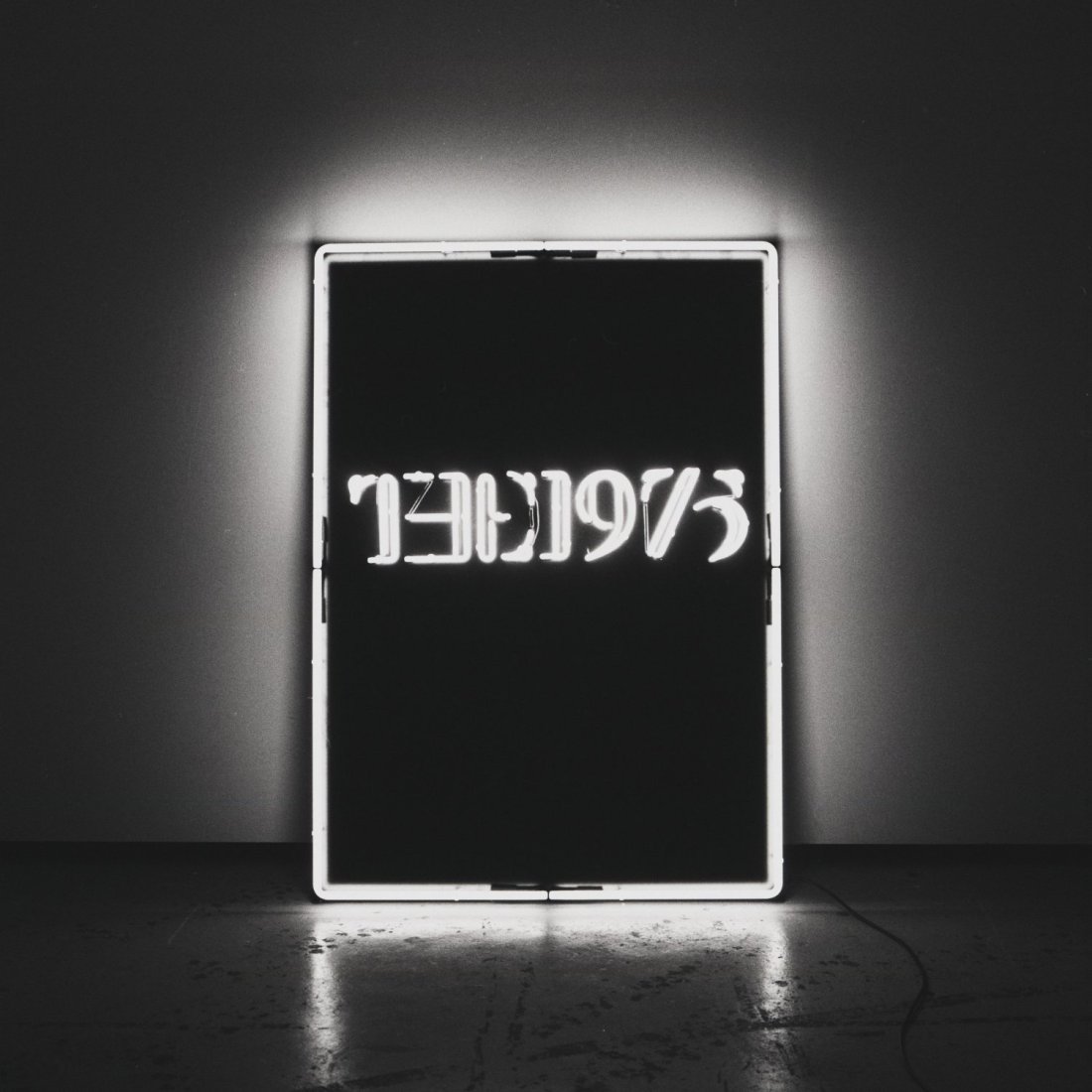
Taking a break from writing my 1975 review to work out a few things on paper. It’s been a tough month. I’ve been rejected from 7 out of the 8 grad schools I applied to over the last four weeks. Each one has been a hit, knocked me out for anywhere from an hour to a few days to a week. I’ve handled it and I’m moving past it; I’ve been working on not internalizing all of this too much because I know it’s kind of a crapshoot no matter what I do in these situations. Still, it’s not fun to get these emails and letters one-by-one-by-one and on and on. No matter how much I tell myself how fine I’ll be if I don’t get in (which I will be, really), rejection can’t not take a toll on me. So I’ve given myself some leeway, which I don’t normally do. I supplant the compulsion to feel guilty about moping with some time to just let myself be sad because I am sad.
As I wait to hear back from the last school, I look back at the past month of rejections, and the sadness and self-reflection they induced in me. The former is boring and not all that important; the latter is. And as I sit here in Plant Hall on a Sunday, putting off all of the stuff I need to do (again), I think about the second wind I got earlier in the week, and take solace in the good things I have in my little bubble which spurned that second wind on, without me really understanding why.
I think I grasp it a little more now, in my caffeine haze. I understand why earlier this week I got out of bed before 11 a.m. for the first time this month. The new 1975 record was waiting for me that morning, and that first listen invaded and reconfigured my headspace, but it wasn’t the record itself that turned things around for me that morning (as incredible as it is, album of the life incoming).
What turned me around, what truly energized me for the first time in I don’t know how long, were all the things I had to say about that record, planted in my brain to be harvested over the next few days and weeks. Now, I blamed the record at this point, but as I sat down to write my review and struggled to get everything on paper in a space compact enough where one or two people would read it, I realized that I was pulled out of my haze of momentary failures by the thing I was meant to do with my life. It hit me at around 500 words (wherein I hadn’t even exhausted all I had to say about “Love Me,” and had forced myself to move on), when I stopped and took a walk around the building through which I’d come and gone countless times over the last four years.
I was meant to write about music. I don’t mean that divinely or self-indulgently (although I like it when you sleep… sure does inspire that kind of rhetoric), I mean that in the most intimate and personal way. It doesn’t mean that I think I’m all that good at it or that I’m unique in any way, or that I don’t grapple with the difficulty of constructing my chosen art form completely on the basis of another art form. But it does reduce those worries in my mind to something more manageable.
The proposal I sent to my graduate schools was to be a kind of cultural studies project on the punk subculture, analyzed through a theoretical lens. That’s simplifying it a lot, but that’s basically what it was. Although I was excited about the prospect of tackling this project, I found that I was shy about telling more than a few people out of some kind of fear of being judged…I can’t even put my finger on exactly why. I know now that this was a stupid attitude. I walked to my advisor’s office to talk it out, but he wasn’t there (which is kind of shocking actually, even though it’s Sunday). But I think I’ve parsed it out on my own. That attitude is stupid because I’m god damn lucky.
I’m lucky to know what makes me happy; what makes me feel worthwhile; what makes me feel like I have something, anything to say. And I’m going to follow that feeling for as long as it still exists in me. Whether it’s in grad school (by the way, I love you [graduate school redacted] admissions person), or through a publication, or all by myself in a million unread word documents while I work some crappy (or maybe even good!) unrelated job. And as I prepare to leave this school, having no clue where I’m going or what I’m doing, I realize that every little thing I’ve done here has led me to this realization—this thing I came into this place knowing, on some level—that I wanted to write about music. If I’m leaving college sure of anything, this is it.
And that’s something to feel good about….I feel good about it. I can’t promise that I always will, but right this moment, I’m happy to have something that gets me out of bed.
Okay, that’s it. Back to the sound and the words that come with it.
Today The 1975 officially released their incredible sophomore album I like it when you sleep, for you are so beautiful yet so unaware of it. I’m working on a review of that record now, and for nostalgia’s sake I sought out the review I wrote for their debut in 2013. My love for this record has only expanded in the past three years (I even like the spelling in “MONEY” now!), and it’s interesting to compare the way I felt about The 1975 in those early days of release with the dawning of a brand new record. The feelings are similarly magical and inspiring. I’ll spill a lot of words about this band in the coming days, but for now I thought it would be fun to put this review back on the web for nostalgia’s sake.
The following review was written in 2013 for The Minaret, during my first year as arts editor.
Some music has a way of completely surrounding a listener. Headphones on, lights out, eyes closed, volume up. Somehow, the music provides all of the color in the world. It may sound romanticized, but the most important music is not the most technically advanced or lyrically clever—it’s the music that defines a point in time in a listener’s life. I can hear a song I loved six years ago and remember how I felt the first time I heard it. This is what makes music more than just sound released from a speaker—it’s an experience all in itself. Sometimes, it’s expected— if an artist I’ve loved for years releases an album, I will obviously expect to love said album. Other times, it comes without warning and knocks me off my feet.
Enter Manchester, UK’s The 1975, with a self-titled debut album. After 10 years, five band names, hundreds of shows and a few awesome EPs, it seems silly how little I knew about them before this past month. However, my ignorance has made the impact of The 1975 all the more powerful.
Headphones on, lights out, eyes closed, volume up.
The record opens with the aptly titled “The 1975,” a slow-burn intro track that displays The 1975’s remarkable attention to detail and atmosphere when creating music. The song invokes images of dark highways, with city skylines growing brighter and brighter the closer they get. “Go down/Soft sound/Midnight/Car lights,” mumbles Matt Healy melodically. The song builds and builds until the highway ends and “The 1975” collides with “The City,” a steady, driving track which shows the band’s ability to write an incredible but simple hook (“you want to find love, you know where the city is”).
This ability is essential here, as The 1975 is undoubtedly a pop album, one that justifiably thrives on the strength of its hooks. However, The 1975 shows that it has the upper hand over other pop acts by putting just as much weight on groove and overall sound as it does on catchiness. Take for example “M.O.N.E.Y.,” a sporadic track with a more understated hook (“has he got enough money to spend?”) that blends in with the verses. “M.O.N.E.Y.” focuses more on making the listener move with its myriad of sounds than it does on making them remember the chorus. This is not to say that The 1975 is devoid of radio hits, as “Sex” is a soaring, all-out, pop-rock track, so rich in youth and impulse that it’s sure to be a fan favorite for the entirety of The 1975’s career.
As difficult as this is over a 16-track run time, The 1975 never falters from its impeccable flow. The interludes help out, reminding the listener that this is indeed a complete album and not just a collection of songs. Lyrically, the record focuses on the recklessness and insecurity that comes with early adulthood—dealing with infidelity and lust (“there’s only minutes before I drop you off/ all we seem to do is talk about sex/ she’s got a boyfriend anyway”), as well as feelings of responsibility and regret (“When I’m home you know I’ve got you/Is there somebody who can watch you?”).
The 1975 reaches a climax of sorts with “Robbers,” an impeccable love song that puts emotion at the forefront as it builds into an imaginative vignette of fragile young love (“Well now that you’ve got your gun/It’s much harder now the police have come/And I’ll shoot him if it’s what you ask/But if you just take off your mask/You’d find out that everything’s gone wrong”), making for one of the best songs of the year.
As new and exciting as The 1975 feels, it is the influence it takes from the past that really takes the album over the edge. “Girls” and “Heart Out” could have been ripped from an ‘80s John Hughes film, while the former and “Pressure” are bleeding with sounds of Michael Jackson worship.
Perhaps the most impressive aspect of this album is how singular everything feels. Nearly every sound produced, every lyric and every track-to-track transition feels natural. No one element takes precedent—The 1975 itself is the star of this album. Not every decision lands perfectly (the spelling part in “M.O.N.E.Y.” is grating, and the back half of the album is much stronger), but over 16 tracks, there are an amazingly few number of missteps.
With their debut album, The 1975 have crafted something memorable and important. It is as futuristic as it is nostalgic and as pondering as it is upbeat. While The 1975 are sure to make a huge cultural impact in the next few years or even months, the band has already proven their venture to be successful. They have created an album that will resonate with their fans and define a point in time in their lives. Because of this, The 1975 has already hit it big—anything more is just well deserved money in the bank.
Mineral Girls – Cozy Body
Tame Impala – Currents
The Front Bottoms – Back On Top
mewithoutYou – Pale Horses
Laura Stevenson – Cocksure
Vince Staples – Summertime ’06
Carly Rae Jepsen – Emotion
The Money Pit – The Money Pit
Foxing – Dealer
Ace Enders – Hiraeth
Young Jesus – Grow/Decompose
Prawn and Moving Mountains – Split
Chvrches – Every Open Eye
Better Off – Milk
All Get Out – Movement
Beach House – Depression Cherry
Drake – If You’re Reading This It’s Too Late
Alabama Shakes – Sound and Color
Adult Mom – Momentary Lapse of Happily
Built To Spill – Untethered Moon
Donnie Trumpet and the Social Experiment – Surf
Butch Walker – Afraid of Ghosts
Titus Andronicus – The Most Lamentable Tragedy
Noah Gundersen – Carry The Ghost
Fall Out Boy – American Beauty/American Psycho
Sufjan Stevens – Carrie and Lowell
War On Women – War On Women
Punchline – Thrilled
Grimes – Art Angels
The Mountain Goats – Beat The Champ
GLOSS – Demo
Eskimeaux – O.K.
Baroness – Purple
Oso Oso – Real Stories of True People…
Good Old War – Broken Into Better Shape
Death Cab For Cutie – Kintsugi
Emancipatior – Seven Seas
Petal – Shame
Waxahatchee – Ivy Tripp
Modest Mouse – Strangers To Ourselves
Kendrick Lamar – To Pimp a Butterfly
The World Is A Beautiful Place… – Harmlessness
Allison Weiss – New Love
Chayce Halley – Bloom House
MuteMath – Vitals
The Sidekicks – Runners In The Nerved World
Desaparecidos – Payola

I wrote an article for a new organization called Safer Scene–which strives to make the punk/alternative/emo scene a more open and safe place for everyone. They’re going to do some really great and incredible stuff for our community and I was honored to help. Make sure you keep up with them on Facebook, Twitter, and Tumblr!
 Jordan Walsh